
A Most Challenging Site
Cape Adare is one of the most hostile environments in the Antarctic, renowned for its gale force winds and extreme weather. Storms approach quickly, often plunging temperatures below -30 degrees Celsius and producing winds upwards of 200 km/hr, capable of creating airborne projectiles out of ice and small stones.
Cape Adare is isolated and challenging to access. Being some 750km north of New Zealand’s Scott Base, intensive planning, cooperation and logistical support from multiple international Antarctic programmes, and luck with the weather, are all necessary for Antarctic Heritage Trust conservation teams and their equipment to safely reach and work at the site. Home to around 1 million Adélie penguins, it is the world’s largest Adélie rookery, meaning visits also must be carefully timed so as to cause minimal disturbance to the penguin colony.
Conservation at a glance
Due to its remote location, the site presents significant logistical challenges.
A specialist team recently completed detailed condition assessments of the historic huts, Hanson’s Grave and the surrounding environment. The information gathered will support the finalisation of the site’s revised Conservation Management Plan which guides future conservation work and care for a collection of more than 1,500 artefacts associated with this site.
Famous Discoveries
History of the Expedition
The Trust takes on these challenges in order to safeguard the culturally significant buildings at Cape Adare.
“These are often regarded as the most significant buildings on the Antarctic continent from a heritage perspective, given they were the first ever to be erected, and are so closely tied to Commander Carsten Borchgrevink’s Southern Cross expedition (1898–1900), and the Northern Party of Scott’s Terra Nova expedition (1910–1913). They are also protected under the Antarctic Treaty System, ensuring they will benefit from a programme of conservation, rather than being left to deteriorate and scatter into the environment.” said the Trust’s Collections Conservation Manager, Lizzie Meek.
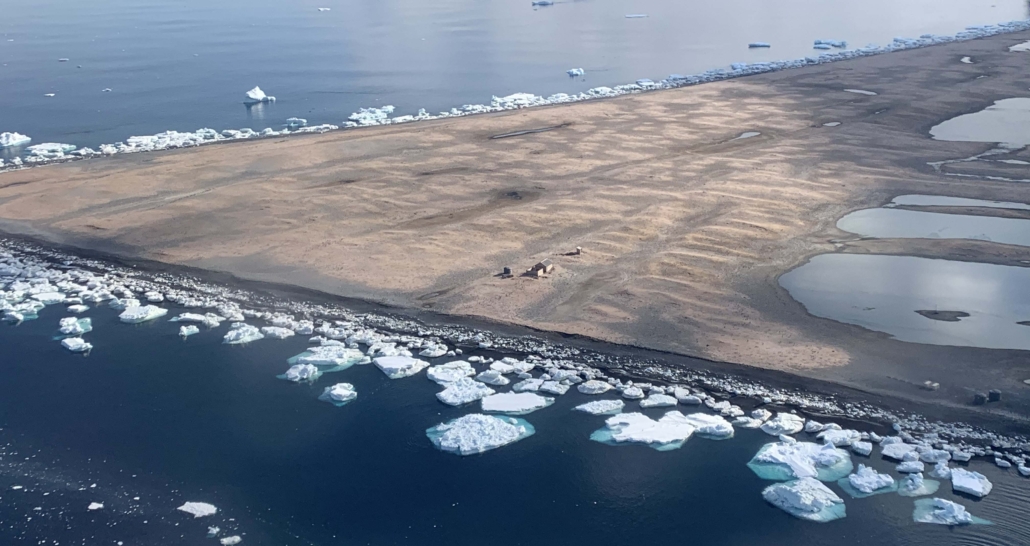
Cape Adare viewed from the air. © AHT/Doug Henderson
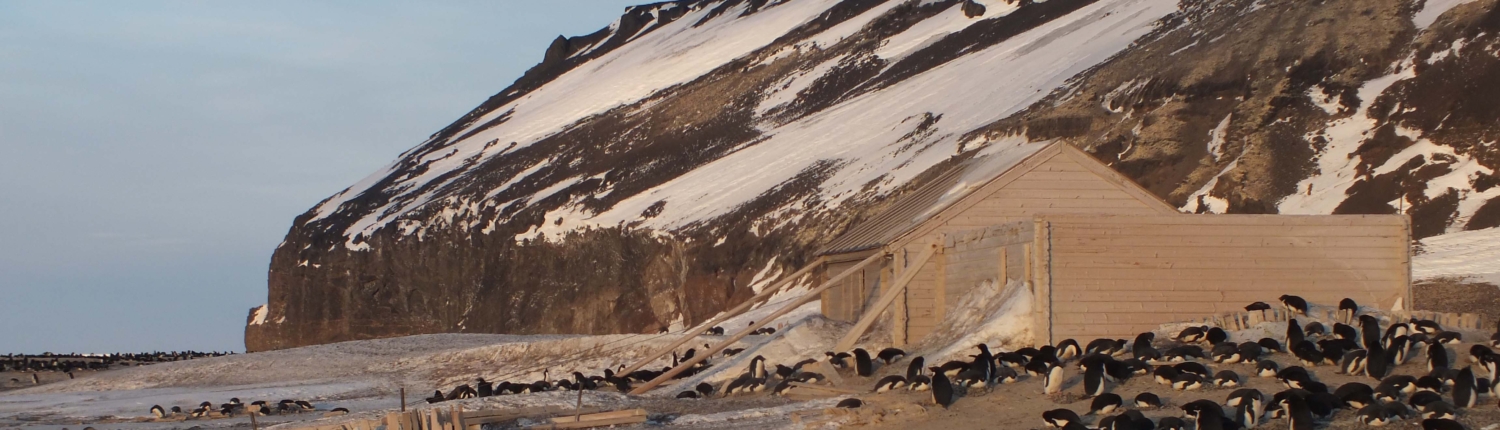
Borchgrevink’s huts at Cape Adare. © Landcare Research/Morgan Coleman
Borchgrevink’s Pioneering Expedition
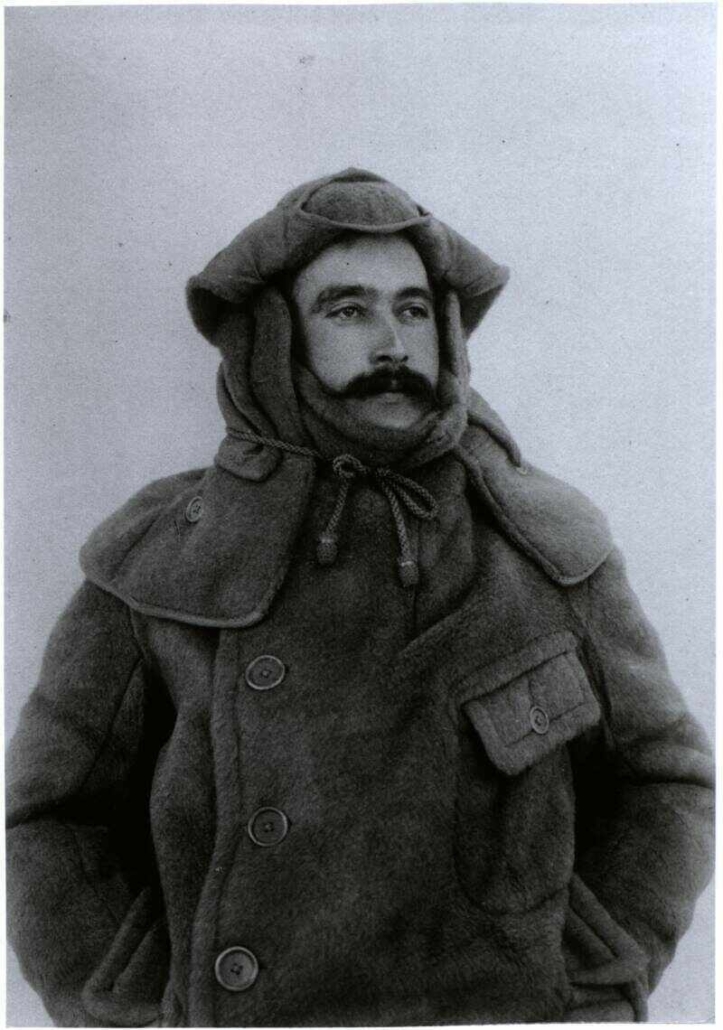
Though not as famous as Scott or Shackleton, Carsten Borchgrevink played a crucial role in Antarctic history.
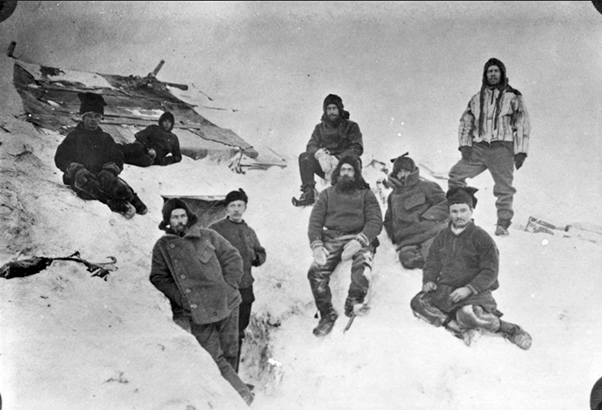
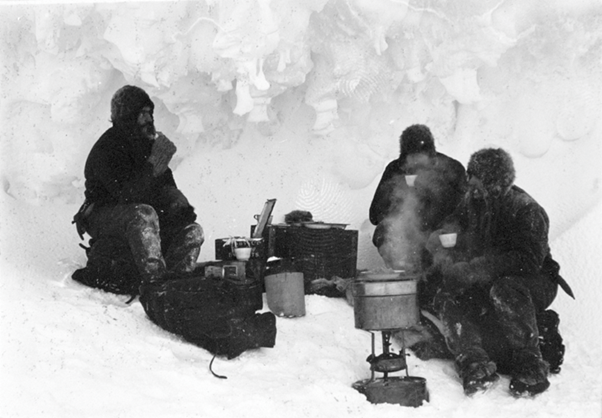
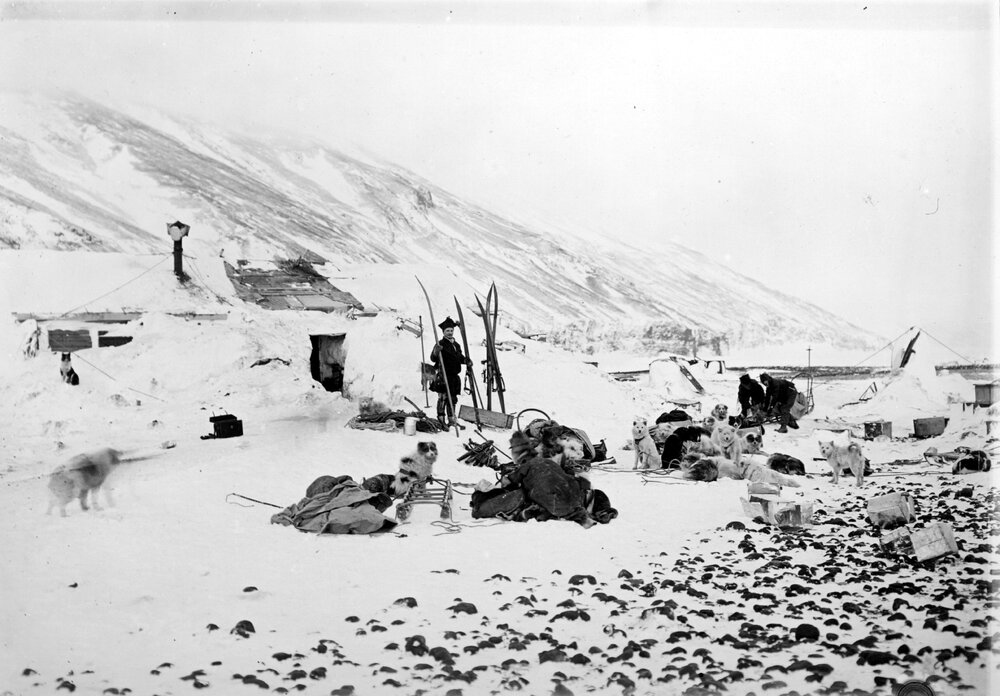
Borchgrevink’s British Antarctic (Southern Cross) Expedition 1898–1900 achieved significant milestones. They conducted scientific and meteorological observations, mapped Cape Adare, and made historic sledging and skiing journeys. Perhaps most importantly, they proved humans could survive an Antarctic winter, paving the way for heroic-era expeditions that followed. The ten men spent the winter of 1899 in cramped huts on the windswept Cape Adare, surrounded by towering cliffs at the northern edge of the Ross Sea.
Tragically, the expedition suffered the first known death in Antarctica, when the Chief Zoologist, 26-year-old Nicolai Hanson, died of suspected beriberi disease.
Borchgrevink’s huts still stand today, making them the only example left of humanity’s first dwelling on any continent.
Conservation Through the Years
Since Scott’s Northern Party’s departed Cape Adare in 1911, there have been only sporadic visits by conservation teams to this remote site. New Zealand parties visited a couple of times during the 1960s and 70s to undertake repairs, before Canterbury Museum sent an expedition party to the site in 1982 to carry out maintenance work, complete drawings of the huts, and document the artefacts.
The first party from the Trust visited in 1990 and carried out significant preservation works to the huts. This focus continued on the Trust’s next visit in 2003, when condition reports for the artefacts were also completed.
Recognising the site’s profound historical and cultural significance, the Antarctic Heritage Trust initiated a comprehensive conservation effort as part of its Ross Sea Heritage Restoration Project (RSHRP), with a Conservation Plan for the site published in May 2004.
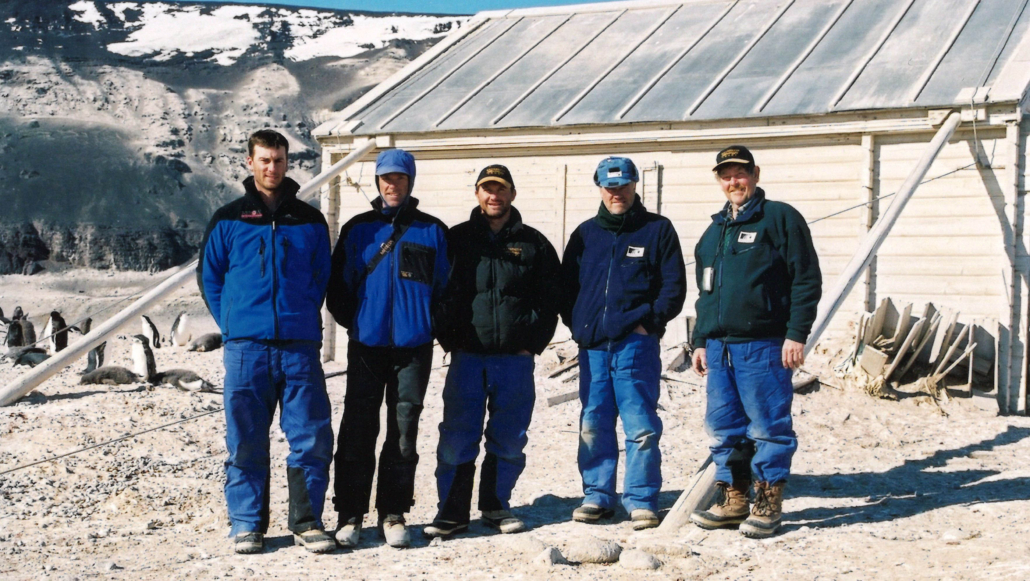
An early Trust conservation team outside Borchgevink’s hut, Cape Adare in 2003. L-R: Arrow International Consultant Aaron Smail, Antarctica New Zealand Field Support Euan Paterson, Antarctic Heritage Trust Executive Director Nigel Watson, Purcell Miller Tritton Architect Michael Morrison, South Latitude Research Artefact Consultant David Harrowfield. © AHT
The Ross Sea Heritage Restoration Project
During the summer season of 2015–2016, a small team from the Trust spent two weeks at Cape Adare, completing the first significant task for the RSHRP’s work at the site.
In this challenging environment, the team carried out important repairs and maintenance on the huts, along with gathering nearly 1500 unique artefacts from the heroic-era of exploration, including clothing, tools, equipment, and food.
The artefacts were frozen and transported under temporary permit to Christchurch, New Zealand, where the Trust’s team of conservators completed the conservation treatment programme at Canterbury Museum in July 2017.
It was during this process that two of the most high-profile artefacts from Scott’s 1911 expedition were discovered – the well-preserved Huntly and Palmers’ fruitcake, and the beautiful 118-year-old watercolour painted by Dr Edward Wilson, who died with Captain Robert Falcon Scott and three others on their return from the South Pole in 1912.
“With just two weeks to go on the conservation of the Cape Adare artefacts, finding such a perfectly preserved fruitcake in amongst the last handful of unidentified and severely corroded tins was quite a surprise. It’s an ideal high-energy food for Antarctic conditions and is still a favourite item on modern trips to the Ice,” said Trust Collections Conservation Manager, Lizzie Meek.
The discovery of the fruitcake and watercolour made headlines around the world. News articles of the fruitcake alone numbered more than 1700, from over 90 countries, written in more than 30 different languages, and had a media reach of over two billion.
The permit the Trust was granted to collect the artefacts stipulates that all of the items must be returned to the site following conservation, in accordance with the site’s status as an Antarctic Specially Protected Area (ASPA).
The conserved artefact collection is currently being stored in secure, monitored cool storage and will be returned to Cape Adare at the completion of the building conservation work programme. This has been held up due to the global pandemic, and the various challenges of returning to such a remote site.
The Trust returned to Cape Adare during the 2025–2026 summer season to continue building the knowledge needed to guide the site’s future conservation. A specialist team carried out detailed condition assessments of Borchgrevink’s hut, Scott’s Northern Party hut, Nicolai Hanson’s grave and the surrounding environment, while also reviewing the infrastructure supporting field operations. The information gathered will support the finalisation of the site’s revised Conservation Management Plan and help inform future conservation work at one of Antarctica’s most complex heritage sites.
“We were able to carry out an hour of Remotely Piloted Aircraft System flight time across Cape Adare, capturing high quality digital images and completing the first aerial photogrammetry of Carsten Borchgrevink’s hut, Scott’s Northern Party hut, and their surrounding environment,” said Event Team Lead Gord Macdonald.
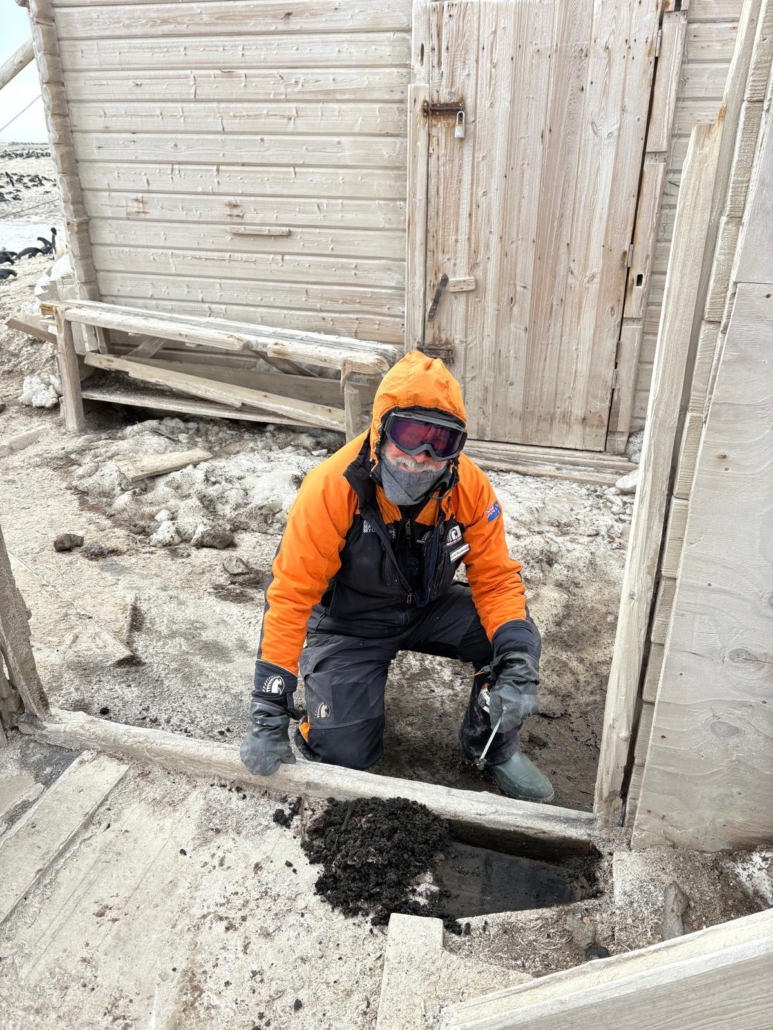
Event Field Lead Gord Macdonald investigating floor at living hut during the 2025-26 on-Ice summer season. ©AHT/Doug Henderson
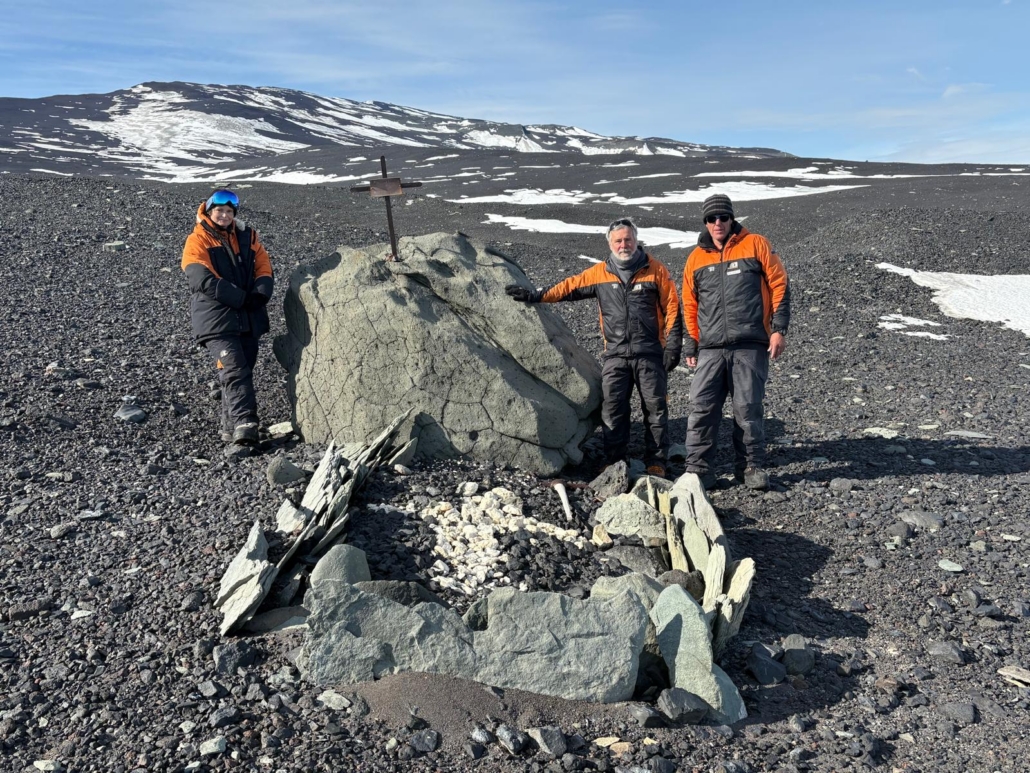
Lucy Hayes-Stevenson, Gord Macdonald, Antarctica New Zealand Doug Henderson at Hanson’s Grave.
© AHT/Gord Macdonald
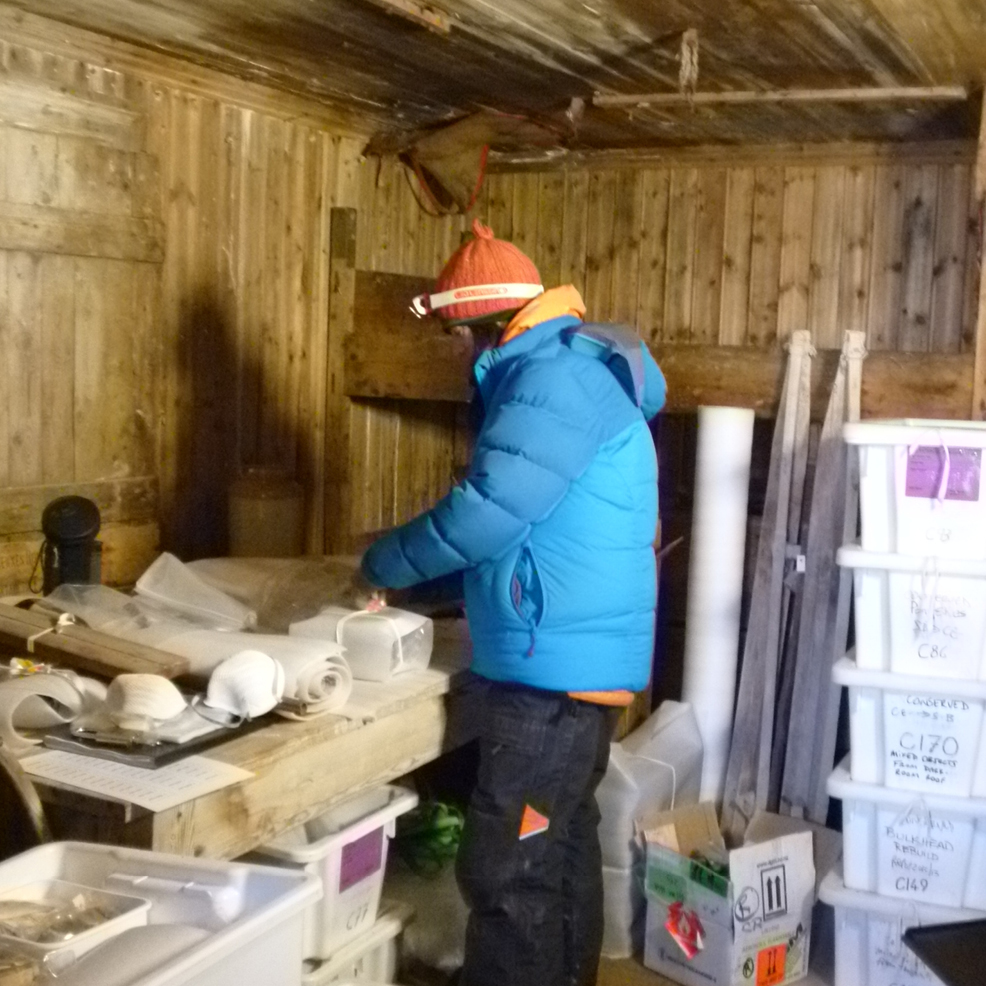
Lizzie Meek, Programme Manager – Artefacts packing artefacts in Borchgrevink’s hut. 2015-16 © AHT/Al Fastier
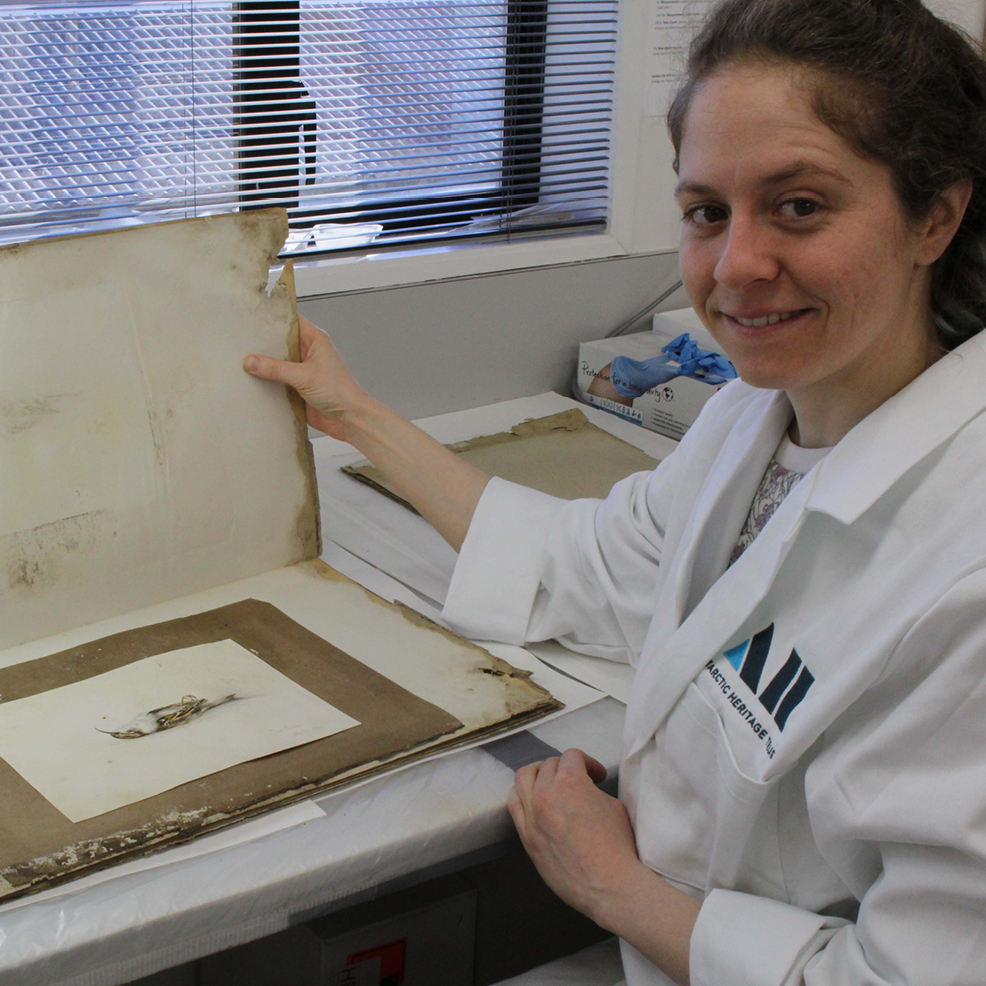
Antarctic Heritage Trust Conservator Josefin Bergmark-Jimenez uncovers Dr Edward Wilson’s watercolour of a Tree Creeper bird specimen. © AHT
Field Camp and Future Plans
To support the restoration project at Cape Adare, the 2015–2016 season also saw the beginnings of a new field camp on site, with the installation of the ‘Polar Pods’. Standard polar tents cannot withstand the hostile conditions on site, so the Trust’s former Ross Sea Heritage Restoration Project Programme Manager, Al Fastier, designed these insulated and double-skinned rigid shell plywood boxes, based on a mountain tent design.
During the 2017–18 season, the ‘Turks’ – three large water tanks converted into a living area, workspace and storeroom, were installed at the field camp. Designed by avid adventurer Erik Bradshaw, the Turks (not a tank, not a hut, not a yurt!) were originally conceived as emergency backcountry ski huts. Antarctica New Zealand commissioned him to provide three for the southern continent, to serve as a temporary base for scientists and Trust conservation teams working at the site.
2020 saw the completion of the field camp at Cape Adare, with additional Polar Pods installed, and conservation equipment positioned and secured, ready for conservation teams.
Al Fastier said at the time, “It’s taken longer than we anticipated to finish the camp installation due to the logistical difficulties of accessing this site. In achieving this year’s work programme the conservation phase of the project has been set up for success, which will allow the iconic site to be conserved for future generations.
It’s an incredibly remote site to work at and the hostile environment really makes you reflect on how harsh that first season would have been for Borchgrevink’s men, the first team to make their home at this site.”
In 2022, the Trust’s on-Ice team undertook remedial repairs on the damaged Turks, which at that time had been on site for almost five years. The Turk’s were installed with anticipation of a five-year life cycle, to support the restoration project on site, but had not been used for that purpose, nor visited by Antarctica New Zealand or Trust staff since early 2020, due to the global pandemic and other logistical challenges.
During the 2025–2026 summer season, the field camp infrastructure was reviewed. This work confirmed the condition of the camp and gathered critical information to support future conservation work at the site.
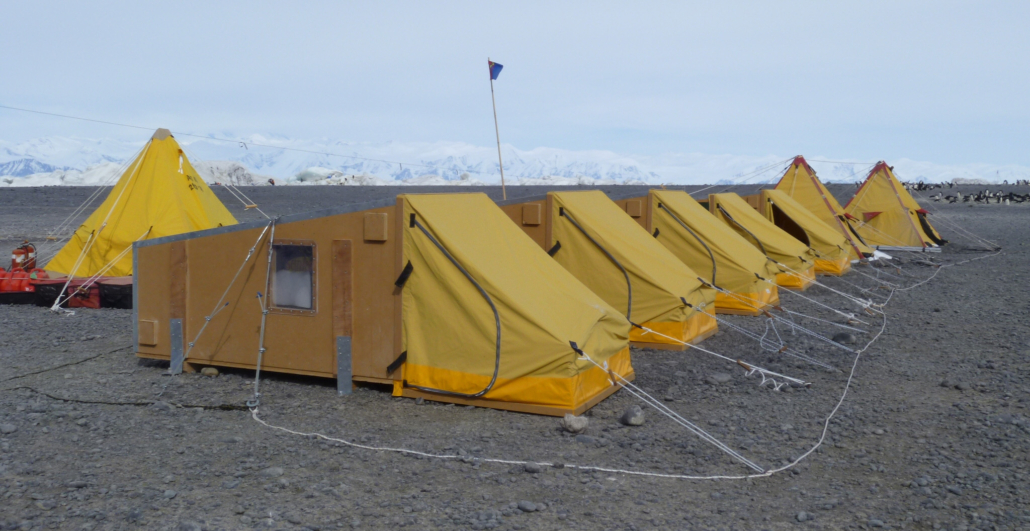
The ‘Polar Pods’ in place at Cape Adare. 2015-16. © AHT/Al Fastier
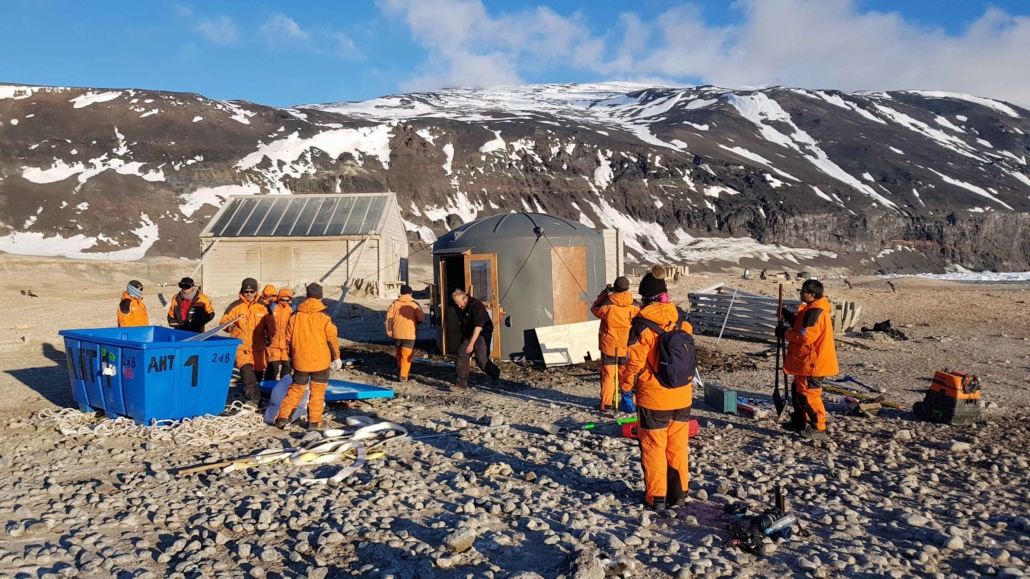
Installation of the ‘Turks’ at Cape Adare. 2017-18. © AHT