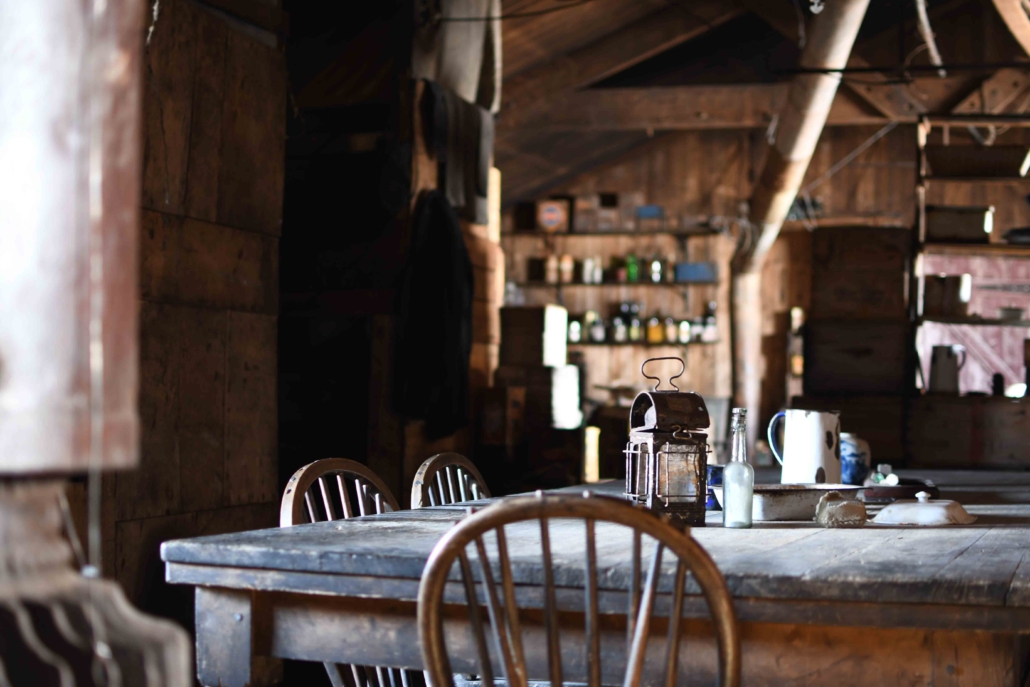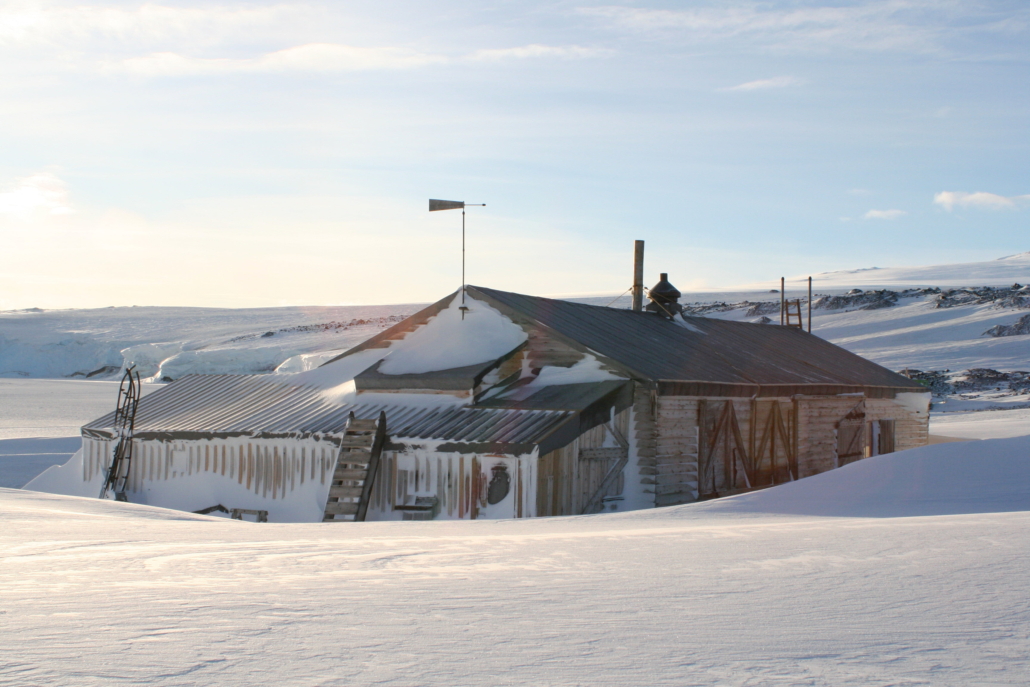
On the shores of Cape Evans, Ross Island, a remarkable structure stands as a reminder of one of history’s most daring and tragic chapters: Captain Robert Falcon Scott’s Terra Nova hut.
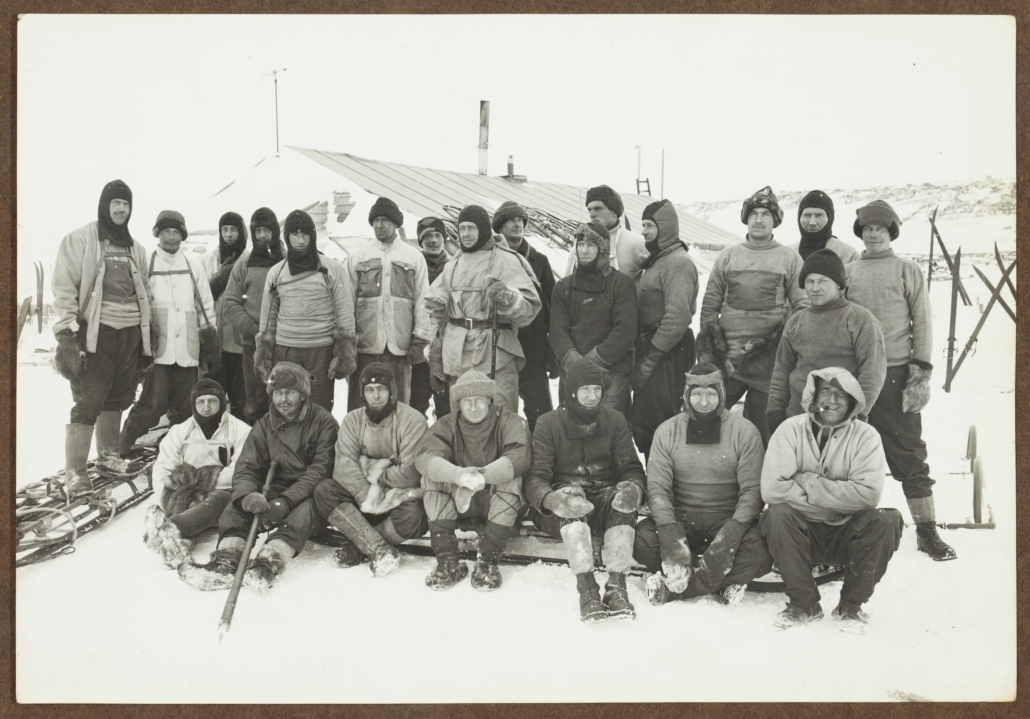
Constructed in 1911, this shelter became the heart of Scott’s British Antarctic Expedition 1910-1913, a bold venture that would lead to his second and ultimately ill-fated attempt to reach the Geographic South Pole. The hut, weathered by time and the elements, remains a poignant reminder of the courage, ambition, and sacrifice that defined the heroic era of polar exploration.
Conservation at a glance
Major carpentry programme completed 2007 – 2011.
Major artefact conservation programme completed 2008 – 2014.
11,500+ artefacts conserved. Building repaired and weather-tight.
Ongoing monitoring and maintenance programme in place.
History of the Expedition
Captain Robert Falcon Scott’s British Antarctic (Terra Nova) Expedition 1910–1913
The British Antarctic Expedition: Triumphs and Tragedy
Scott’s second British Antarctic Expedition had achieved a great deal by the time Terra Nova finally departed Cape Evans, in January 1913.
A winter journey had been made to the Emperor penguin colony at Cape Crozier, extensive geological field work had been achieved by the northern and western parties, an impressive scientific and surveying programme was concluded, and the second ascent was made of Mount Erebus.
Significant meteorological records were kept, and these still provide useful baseline data today, while photographic images from the expedition are among the most evocative ever taken in the Antarctic.
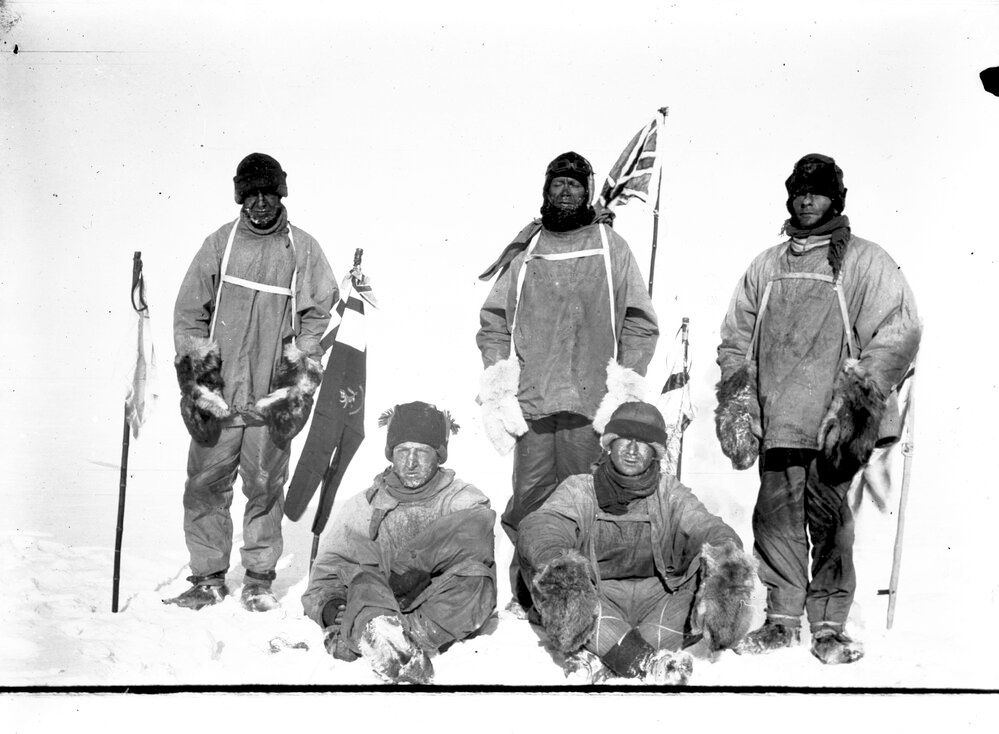
The Union Jack was flown at the Geographic South Pole, with the polar party having battled across the Polar Plateau, finally reaching the Pole on 17 January 1912. Unfortunately for them, waiting there was the small green tent that Norwegian explorer Roald Amundsen and his team had left at the Pole some 35 days earlier, following an exceptionally efficient and effective dog-sled journey from Bay of Whales to the Pole they’d completed in just 57 days.
The cost of being second to the Pole would ultimately prove tragic, as Scott, Dr Edward Wilson, Lieutenant Henry Bowers, Captain Lawrence Oates and Petty Officer Edgar Evans would all perish on the return journey. In their memory, a large wooden cross was erected on Observation Hill, above Hut Point.
This expedition gave rise to some of the most inspirational and harrowing stories associated with polar history. It was also instrumental in laying the foundations of modern science in Antarctica.
Recognising the site’s profound historical and cultural significance, the Antarctic Heritage Trust initiated a comprehensive conservation effort as part of its Ross Sea Heritage Restoration Project (RSHRP), with a Conservation Plan for the site publish in May 2004.
Hut Life
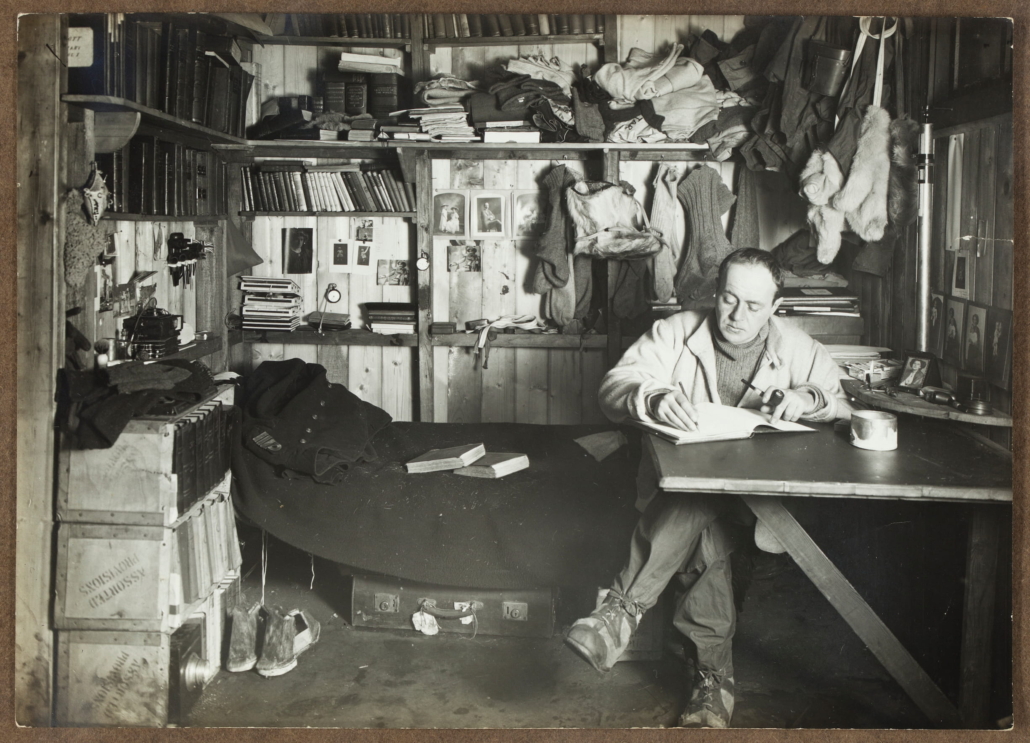
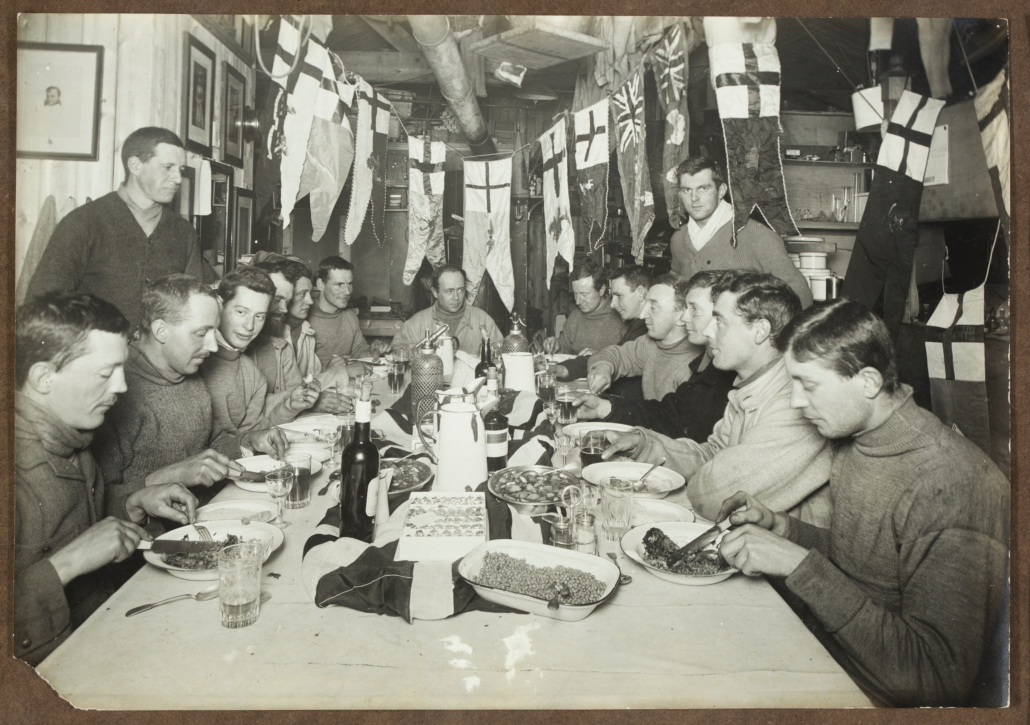
The Ross Sea Heritage Restoration Project
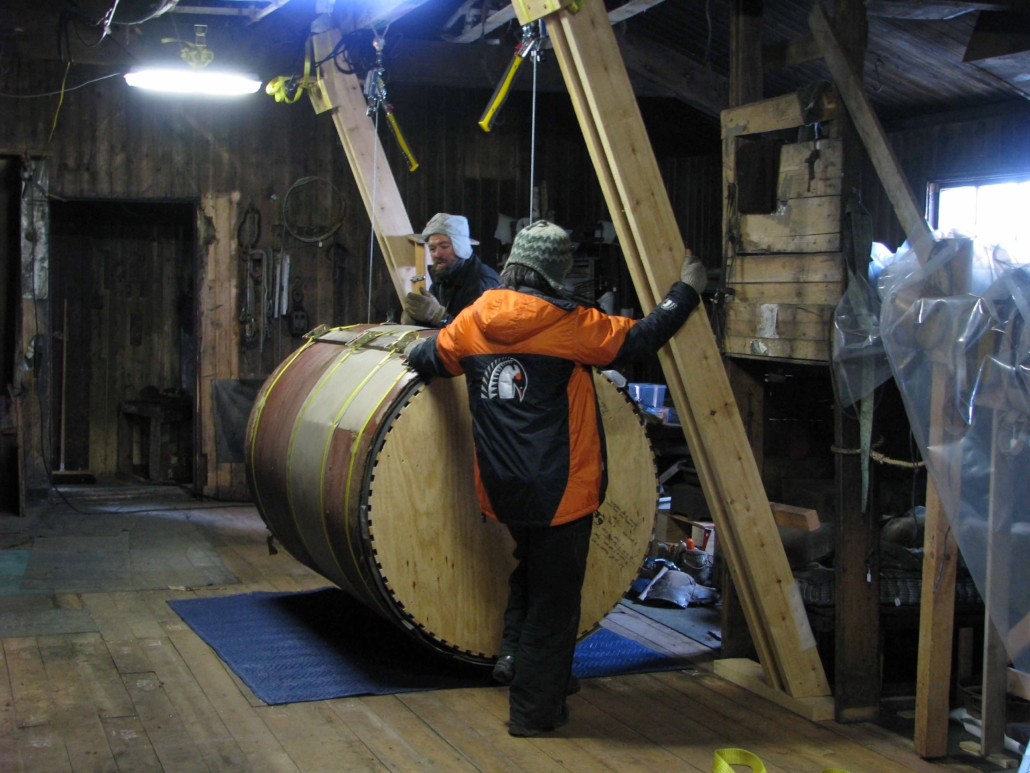
In 2007, after spending prior seasons assessing damage and conducting emergency repairs, the Trust initiated a comprehensive conservation programme to safeguard this crucial piece of Antarctic history. Scott’s Terra Nova hut, distinguished as the largest historic structure in the Ross Sea region, would undergo a five-year carpentry conservation programme and seven-year artefact conservation programme. This major conservation effort unfolded in stages, each season bringing its own set of challenges.
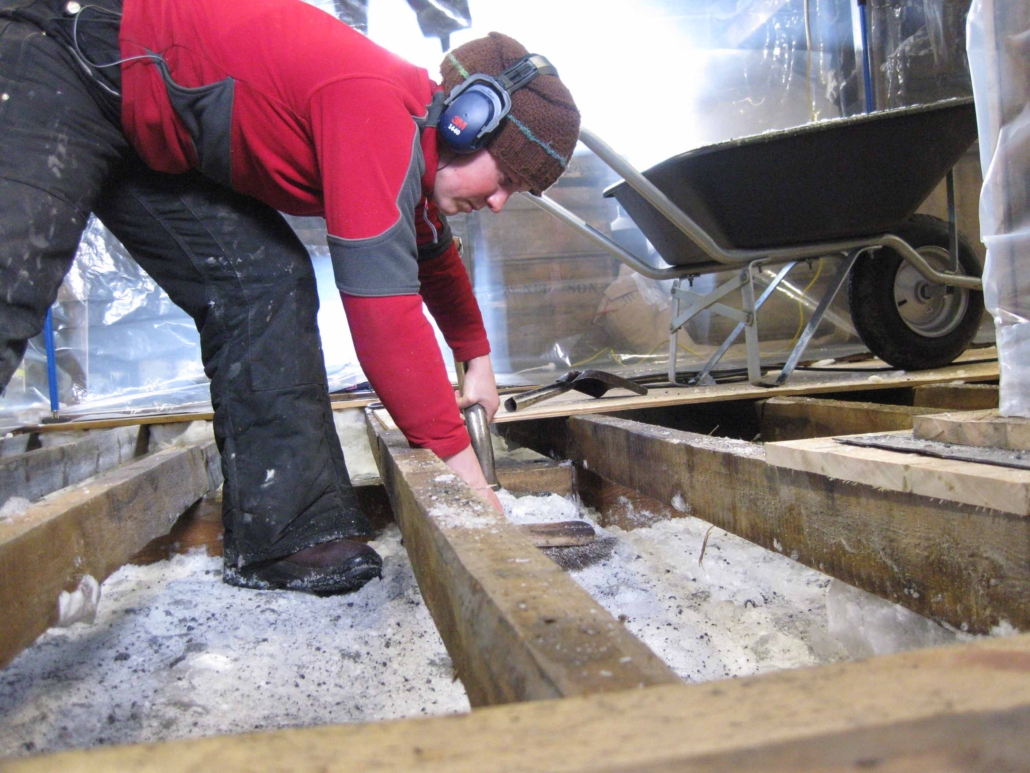
The 2008-09 season marked the beginning of major structural interventions. Conservators tackled the formidable task of removing vast amounts of ice accumulation from beneath the hut, a process that required meticulous care and real ingenuity to preserve the integrity of the floor and its coverings. This season also saw the installation of a waterproof dam along the Western Annex, a crucial step in protecting the structure from encroaching meltwater. Prior to major carpentry work, artefact conservators removed artefacts from the hut, to enable comprehensive treatments and to facilitate safe and efficient carpentry work.
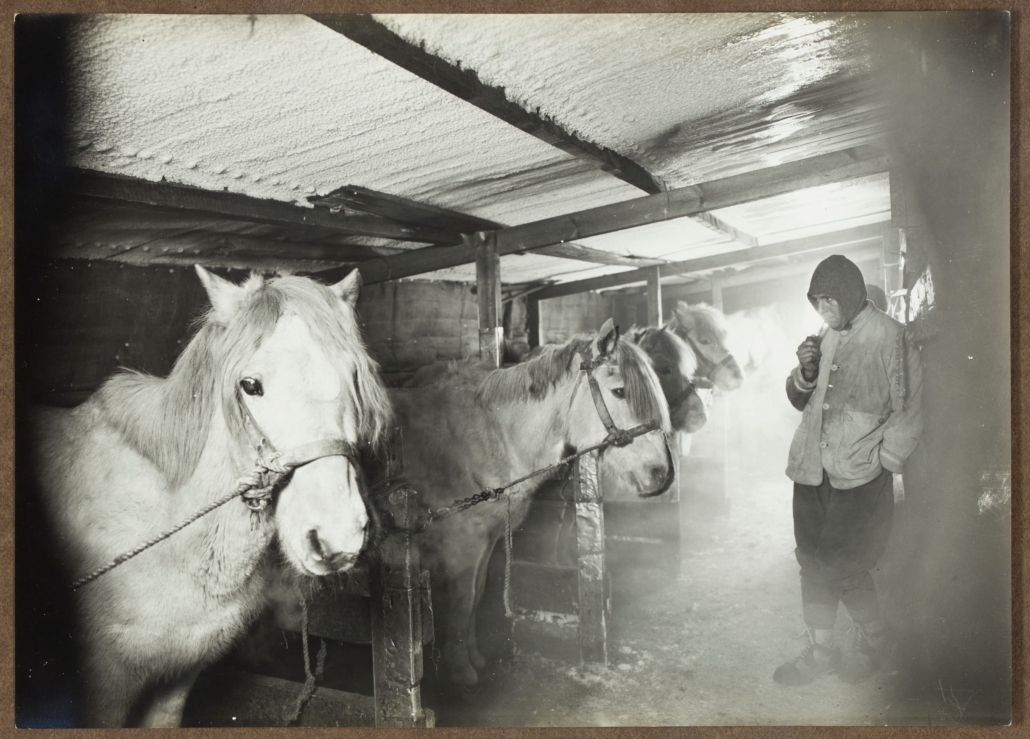
Major structural work continued in 2009-10, with the carpentry team addressing significant structural issues, including damage to the stables caused by years of heavy snow accumulation loading weight onto the roof. Major work to rehabilitate the Stables was undertaken, weatherproofing the structure, and replacing ‘modern’ materials used in previous repairs with more historically accurate materials. The same season, artefact conservators returned an impressive 1300+ artefacts to the hut, painstakingly conserved during the previous winter, while preparing over 1400 more for treatment at Scott Base.
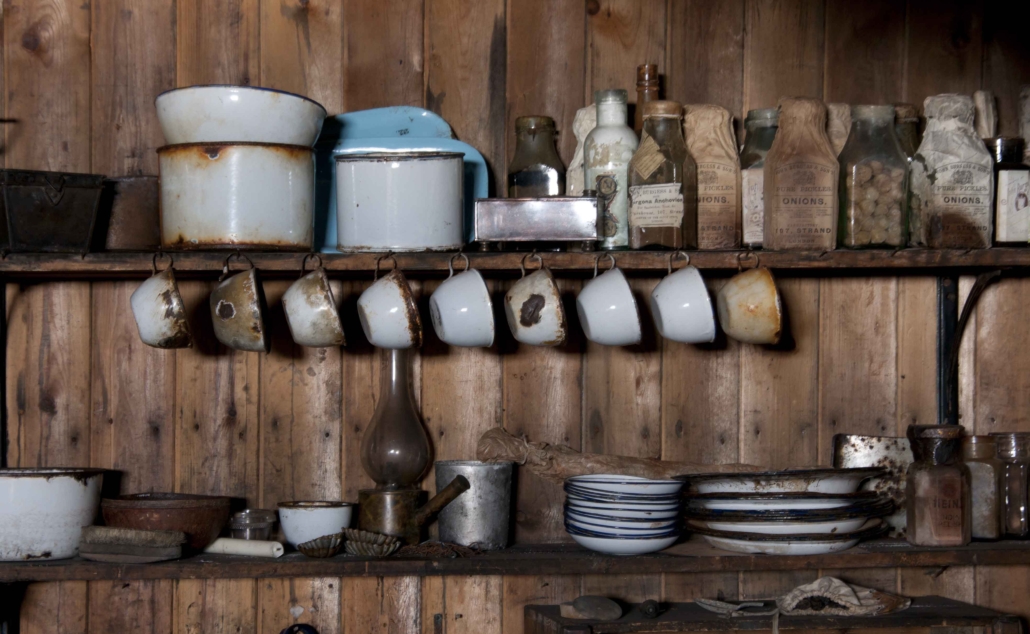
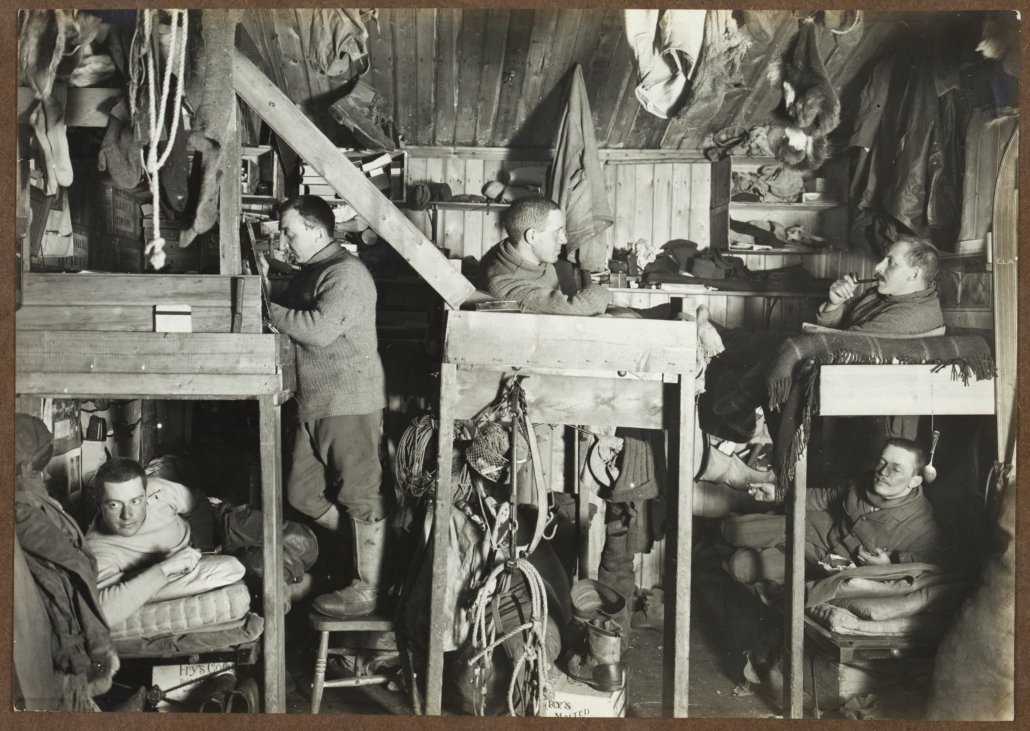
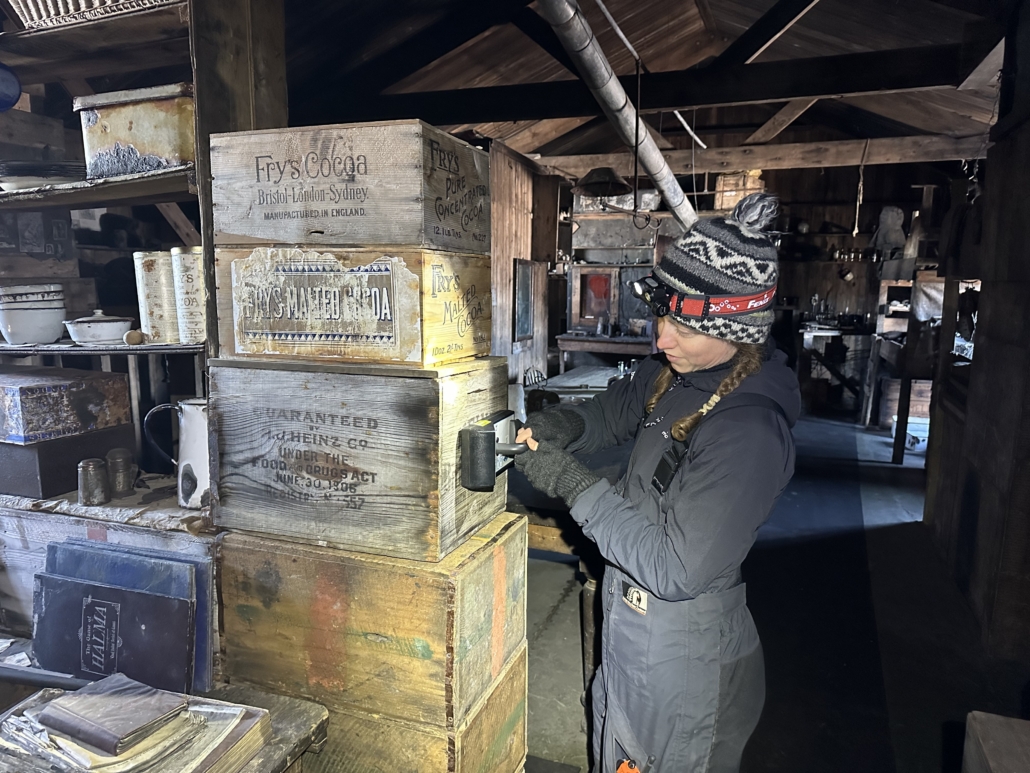
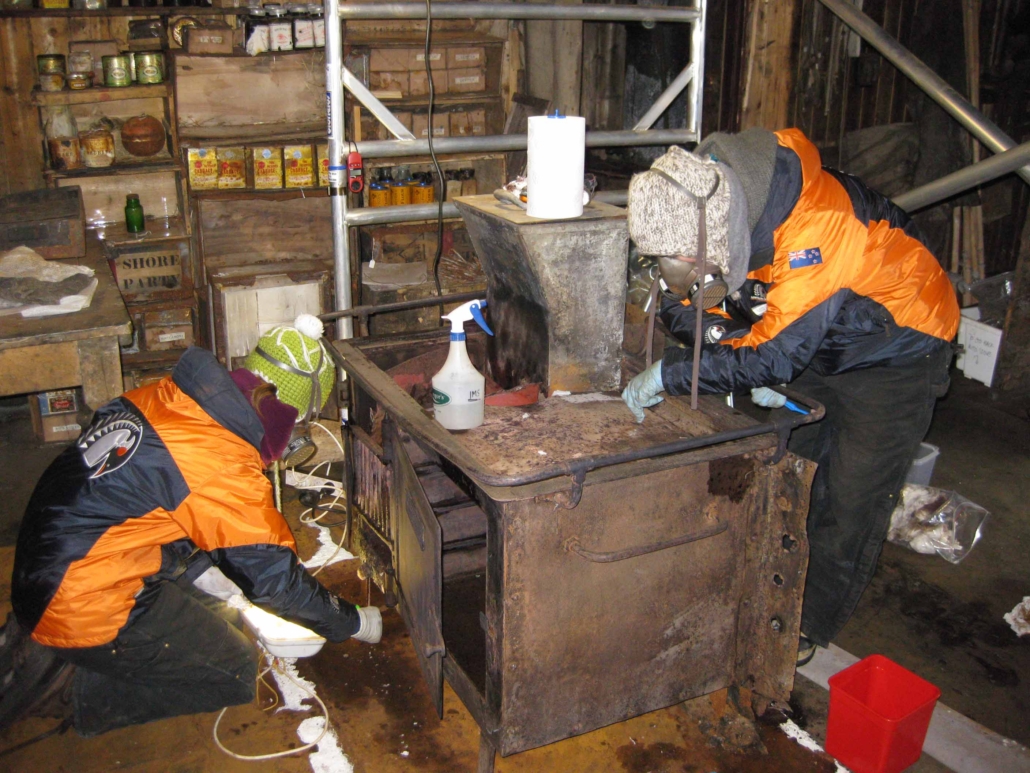
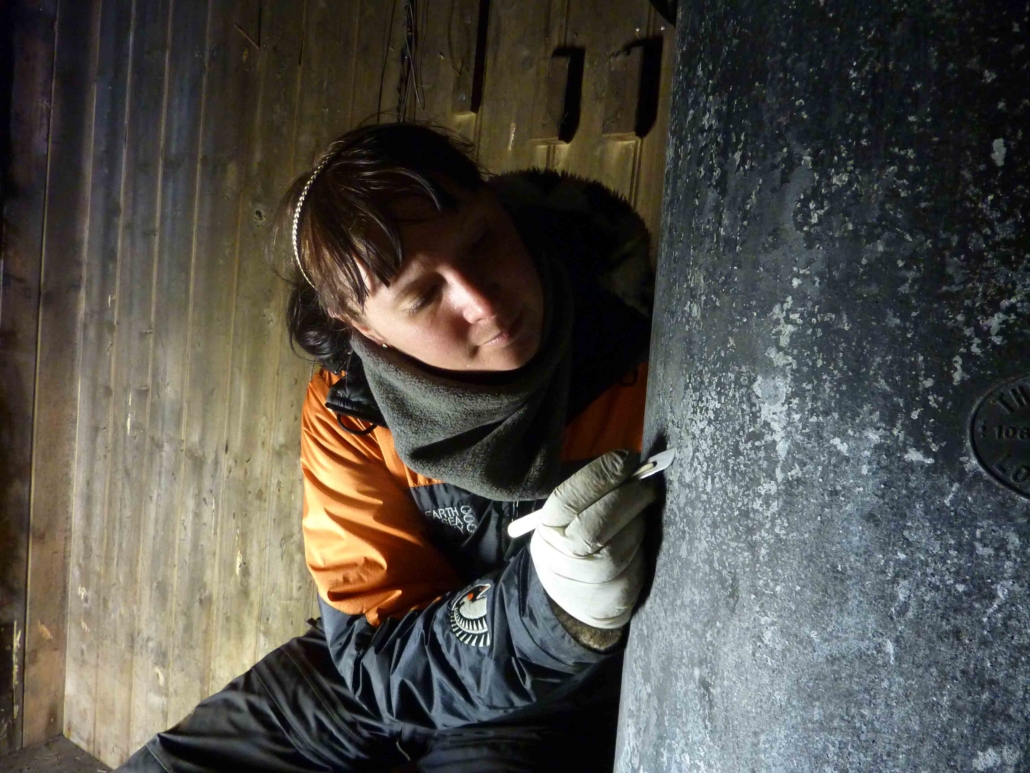
Following seasons saw the carpentry team tackle tasks including drying interior wall fabric, installing new roofing layers, reconstructing historic bunks, and reinstating stove flues and the acetylene piping system. The artefact conservators would meticulously remove, conserve, and replace thousands of artefacts, or treat those that could not be moved in situ, from delicate scientific glassware to robust cast iron stoves and metal bed frames.
In all, the major phase of conservation at the site involved 53 conservation specialists from 12 different nationalities. The significant structural work undertaken by the carpentry team created a stable and secure environment for the artefact collection to be housed within. A monumental effort from artefact conservators across seven years resulted in the entire artefact collection, over 11,500 objects, being conserved.
The conservation effort on site has also yielded remarkable discoveries. Hidden negatives, long-lost notebooks, and artefacts emerging from melting ice have all contributed to our understanding of life during historic polar expeditions. Each find adds a new chapter to the story of Antarctic exploration.
Archaeology Programme
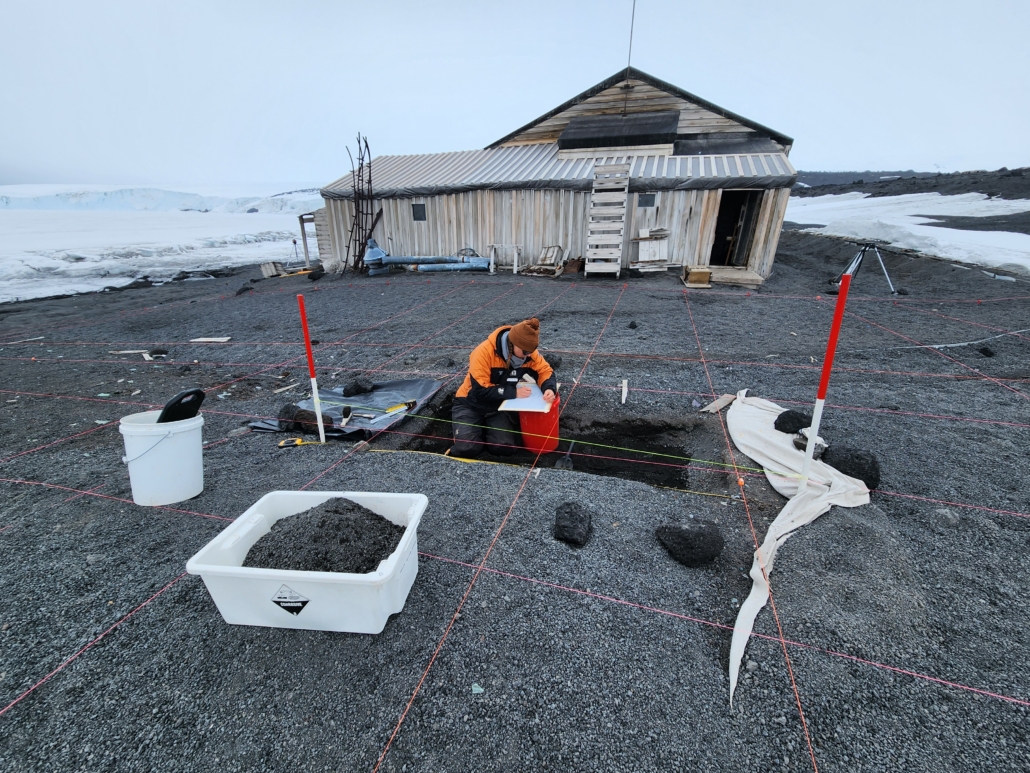
Over the 2024–25 and 2025–26 on-Ice summer seasons, the Trust completed a two year archaeology programme on Ross Island. The landscape surrounding Scott’s Terra Nova hut holds many stories. More than a century after the British Antarctic Terra Nova Expedition (1910–1913), artefacts continue to emerge from the frozen ground as environmental conditions change, providing new insights into the daily lives of the expedition members.
Working from carefully planned assessment areas set out in 1 m x 1 m grids, archaeologists investigated the site’s stratigraphy, assessed how subsurface streams had moved material through the landscape, and processed and documented archaeological finds. Areas along the shoreline were a particular focus, where cultural material is increasingly at risk of being washed away.
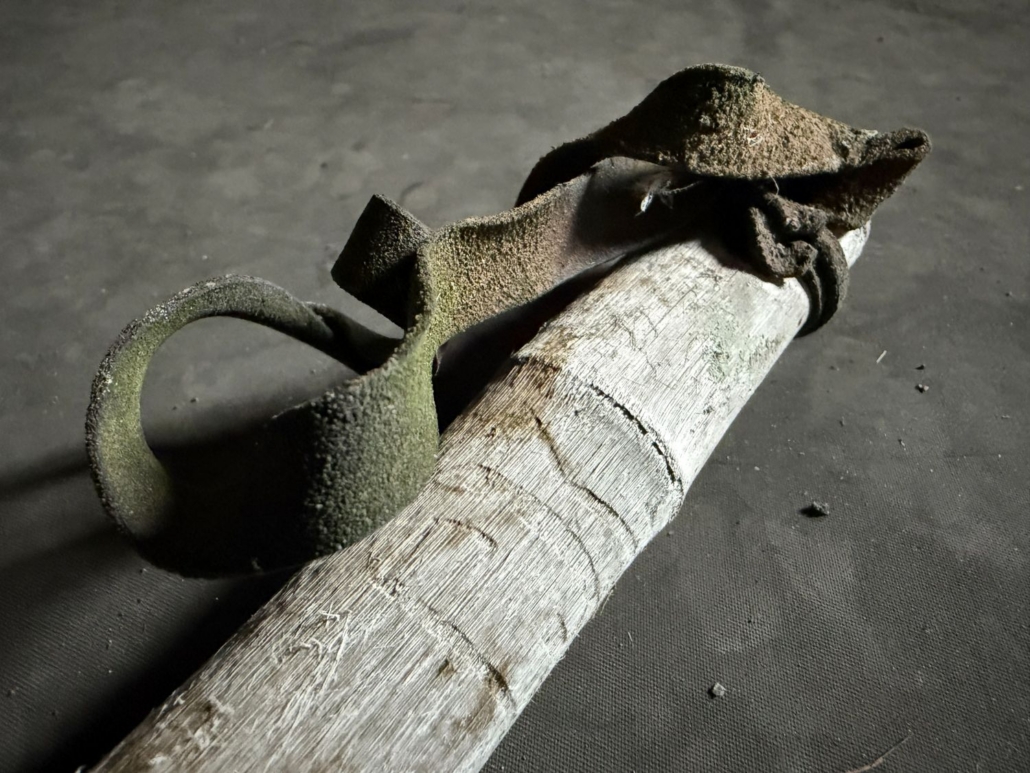
The programme recorded a wide range of archaeological material, including food tins with their contents still intact, seeds, wood, burlap, leather, fabrics, paper with legible print and animal remains. A hand quilted pony blanket that had slowly surfaced from the frozen ground over many years was excavated for conservation, while photographic developers used by expedition photographer Herbert Ponting were also recovered. Archaeologists also uncovered a bamboo ski pole bearing the hand carved initials “P.K.”, belonging to Petty Officer Patrick Keohane.
The team also completed the most detailed heritage survey of the hut environment to date. Using differential GPS technology, they mapped the broader cultural landscape, built a spatial dataset supported by comprehensive photographic and written documentation, and established a monitoring programme for archaeological material most at risk. This information will help guide the future management of the archaeological landscape surrounding Scott’s Terra Nova hut.
Remarkable Discoveries
The Trust’s conservation work continues to reveal remarkable discoveries that deepen our understanding of Antarctica’s Heroic Era. From Hidden negatives and long-lost notebooks to artefacts emerging from melting ice, each find offers a rare glimpse into the lives of the explorers who ventured south more than a century ago.
One of the most recent discoveries came during an archaeological survey at Cape Evans during the 2025-26 summer season, where Archaeologist Emma St Pierre uncovered a bamboo ski pole bearing the hand carved initials “P.K.”. The pole belonged to Petty Officer Patrick Keohane, a member of Captain Robert Falcon Scott’s British Antarctic Terra Nova Expedition (1910–1913).
“Finding this ski pole was the highlight of my season on the Ice. It is rare to uncover an item that can be directly linked to an individual, so this felt incredibly special. To find it amongst all the bamboo scattered around the site was a real moment. Thinking that this pole may have been used during Scott’s journey to the Pole is both exciting and deeply meaningful,” said Emma.
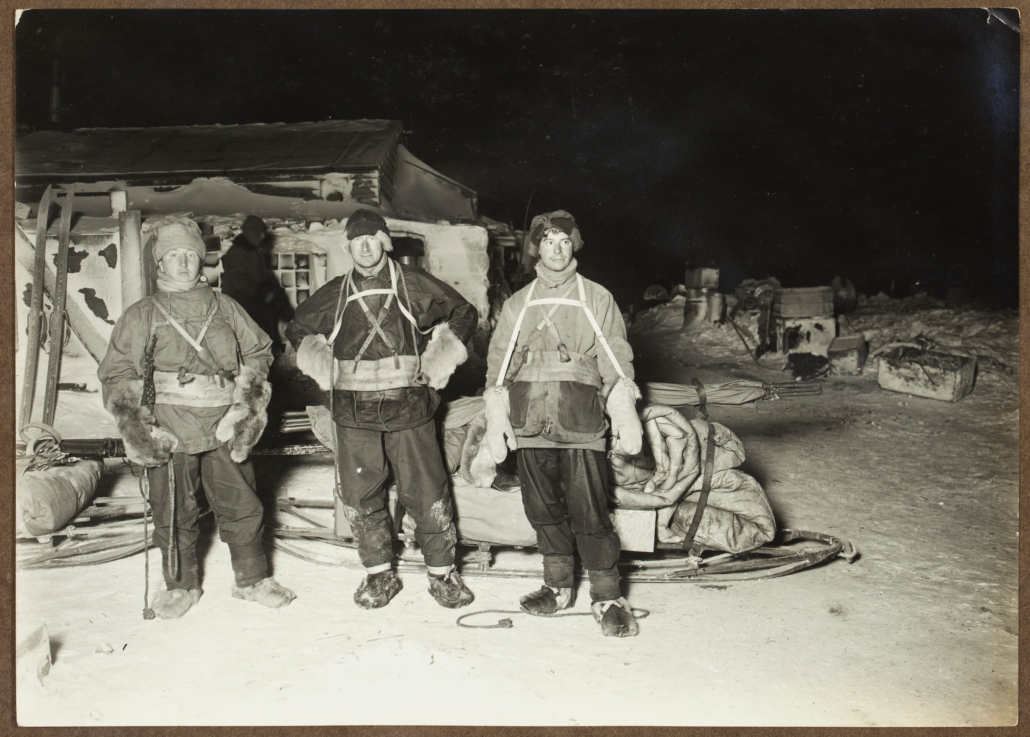
Keohane was one of several Irishmen selected by Scott for the expedition and one of fifteen men who set out from Cape Evans on the 900 mile journey towards the South Pole. He was later turned back 350 miles from the Pole, a decision that ultimately saved his life, while the polar party that continued never returned. Keohane later joined the search party that found the bodies of Scott, Dr Edward Wilson and Lieutenant Henry Bowers.
The ski pole has been stabilised for interim storage and will undergo full conservation treatment before eventually returning to the historic site alongside the Trust’s other conserved Antarctic artefacts.
Each find adds a new chapter to the story of Antarctic exploration.
Conserving History for Future Generations
Today, Scott’s Terra Nova hut stands as a testament not only to the courage of early polar explorers but also to the dedication of Trust conservators. Through their efforts, this structure continues to bridge past and present, offering invaluable insights into a pivotal era of scientific discovery and human endeavour in Earth’s most challenging environment.
The Trust’s ongoing programme of monitoring and conservation interventions at the site ensures that future generations will have the opportunity to connect with this extraordinary chapter in polar history. In conserving Scott’s Terra Nova hut, we do more than protect a historical structure; we keep alive the spirit of exploration and the pursuit of knowledge that drove Scott and his team to the ends of the Earth.
You can learn more about Scott’s legacy and the Trust’s work at Cape Evans by listening to our podcast: Frozen in Time: Scott’s Antarctic Legacy.